Roofing Agency

Types of Insulation Panels for Prefab Buildings: Pros and Cons

Types of Insulation Panels for Prefab Buildings: Pros and Cons
Thirumala Roofings & Structurals

Types of Insulation Panels
for Prefab Buildings: Pros and Cons

By Karthikeyan Duraisamy Read time 4 minutes Category PUF Panels

Choosing the right insulation panel for your prefabricated building is essential — not only for comfort but also for long-term performance and cost savings. One of the most critical components in prefab construction, insulation panels control temperature, enhance energy efficiency, provide acoustic insulation, fire resistance, moisture control, and structural integrity. This guide covers every major panel type with an honest look at the pros and cons of each.

Get In Touch

Choose the Right Insulation Panel With Us

At Thirumala Roofings & Structurals, we offer a wide range of insulation panel options tailored to your prefabricated building needs. Our team of experts will help you choose the best panel type for optimal energy savings and durability.

OfficeNo.81, Kundrathur Main Road, Porur, Chennai – 600 116
Free Consultation

Get a Free Quote

Fill the form below — we'll get back to you within 24 hours.

Why It Matters

Why Insulation Panels Matter
in Prefabricated Buildings

In prefabricated structures, insulation panels are used for walls, roofs, and sometimes floors. These panels do much more than keep heat out. They provide thermal insulation, acoustic performance, fire resistance, moisture control, and contribute to the structural integrity of the panel system as a whole.

The right panel choice affects your energy bills every single month for the life of the building. It affects whether your cold storage room holds temperature reliably. It affects how much noise transfers through walls in a factory. And it affects how the building performs if there's ever a fire on site.

Insulation is especially important in prefab buildings used for:

Warehouses
Cold storage units
Industrial sheds
Commercial spaces
Temporary housing
Modular offices

Well-insulated prefab buildings consume less energy, stay comfortable in all seasons, and last longer. The panel type you pick at the start directly determines the performance and running cost of the building for the next 20 to 30 years.
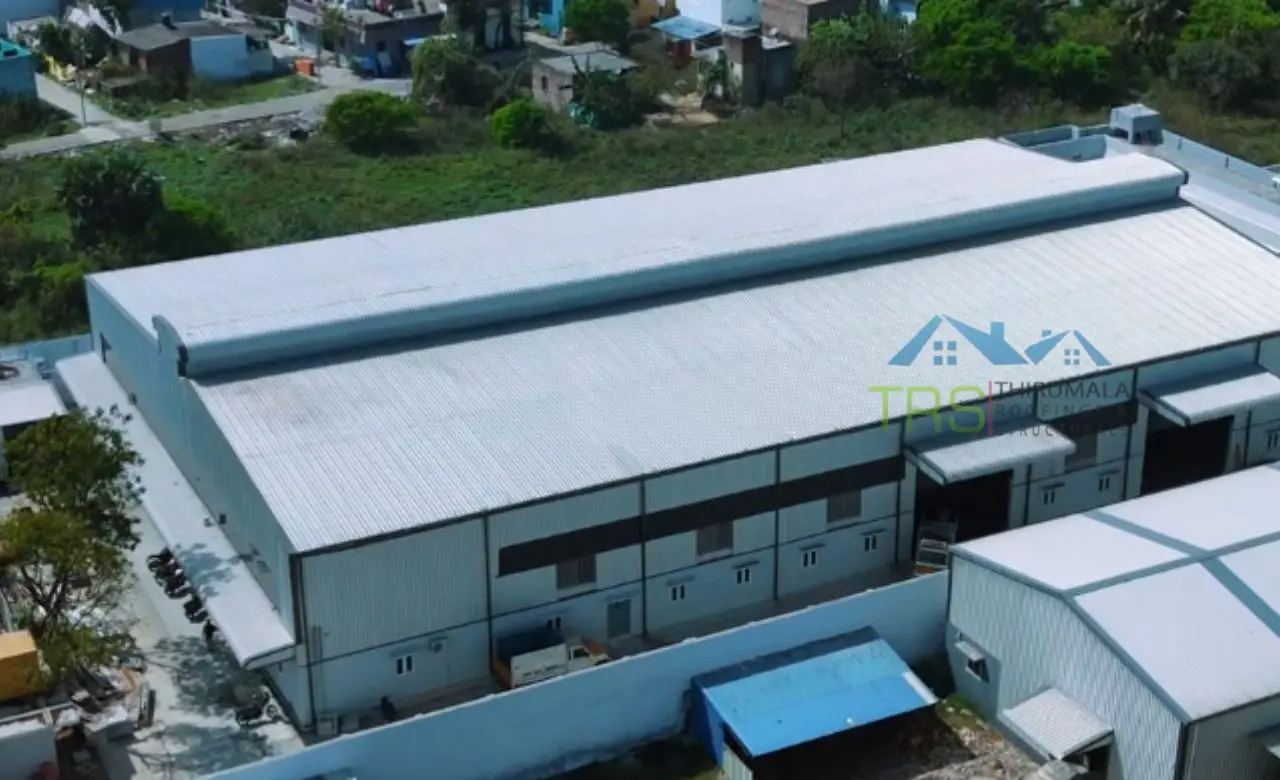
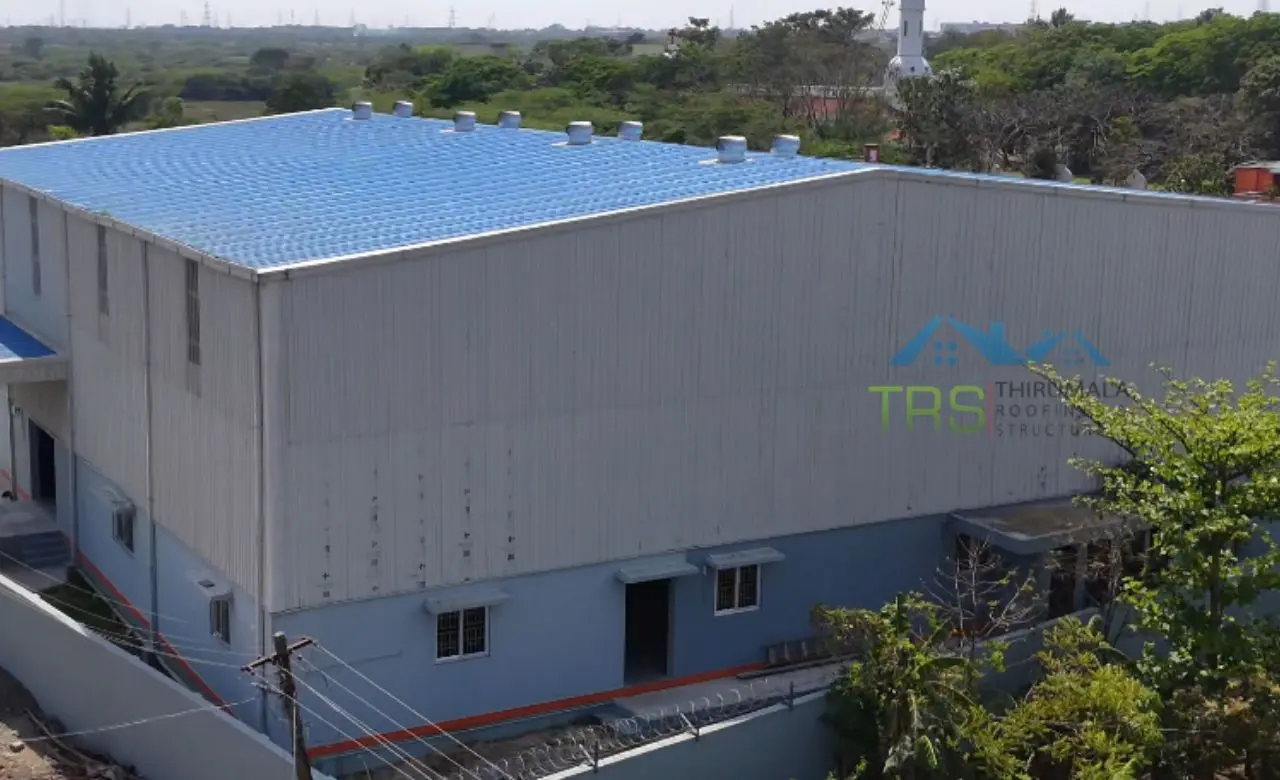
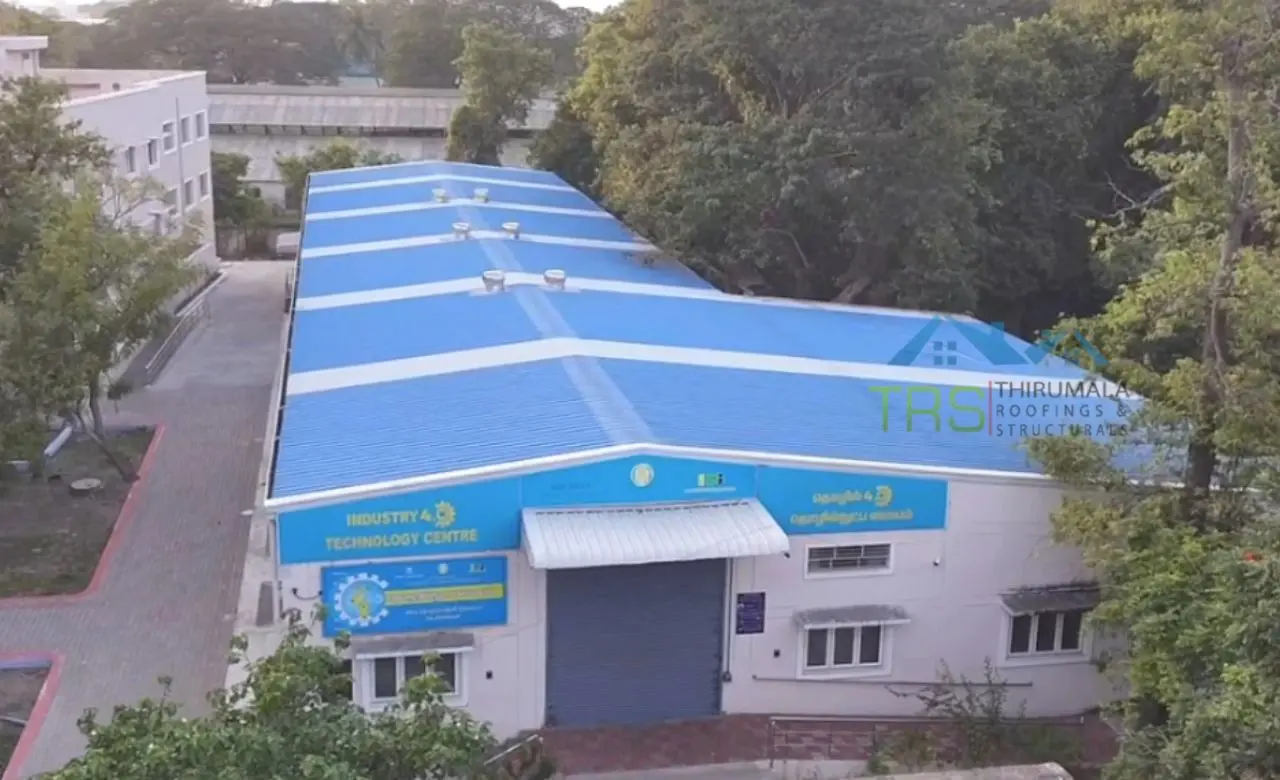
Insulation Panels Prefab Building
PUF Panel Installation
Prefab Insulated Building
Panel Types

5 Types of Insulation Panels
for Prefab Buildings

01

PUF Panels (Polyurethane Foam Panels)

Rigid polyurethane foam core between metal face sheets (PPGI or aluminum)

Most Popular

Overview

PUF panels are made of a rigid polyurethane foam core sandwiched between metal sheets like PPGI or aluminum. They are among the most popular insulation panels for industrial and cold storage buildings.

The closed-cell structure of polyurethane foam gives it the best thermal performance of any sandwich panel type, which is why it's the default choice wherever temperature control actually matters.

Pros

Excellent thermal insulation (Low thermal conductivity ~0.022 W/mK)
Lightweight yet strong
Moisture and chemical resistant
Quick installation with tongue-and-groove joints
Available in fire-retardant grades

Cons

Slightly higher initial cost than EPS
May degrade if exposed to UV without protection on the face coating
02

EPS Panels (Expanded Polystyrene Panels)

Expanded polystyrene foam between two metal sheets

Budget Option

Overview

EPS panels consist of expanded polystyrene foam sandwiched between two metal sheets. They are commonly used for cost-effective thermal insulation where the project budget is the primary driver.

EPS is lighter than most other core materials and handles moderate temperature control well. It's a reasonable choice where the insulation demand isn't as high as a cold storage application but where some thermal performance is still needed.

Pros

Economical and lightweight
Easy to install
Decent thermal insulation (~0.035 W/mK)
Resistant to moisture and decay

Cons

Lower insulation performance compared to PUF
Less fire resistance
Slightly brittle under heavy load
03

Rockwool Panels (Mineral Wool Panels)

Stone wool fibers packed between metal sheets

Best Fire Rated

Overview

Rockwool (or mineral wool) panels consist of stone wool fibers packed between metal sheets. They are known for superior fire resistance and soundproofing — two things no other panel type does as well.

Where safety codes require a non-combustible panel, or where noise transmission between spaces needs to be controlled, Rockwool is often the only option that actually meets the specification.

Pros

Excellent fire resistance (up to 1000°C)
Sound absorption and noise control
Non-combustible and eco-friendly
Good thermal insulation (~0.045 W/mK)

Cons

Heavier than PUF or EPS panels
Higher cost
Requires careful handling during installation
04

Glass Wool Panels

Fibrous glass material for thermal and acoustic insulation

Acoustic Choice

Overview

Made from fibrous glass material, these panels offer thermal and acoustic insulation. Used mainly in controlled environments and commercial prefab structures where sound control and moderate thermal performance are the priority.

Glass wool is lighter than Rockwool and handles acoustic performance well for its weight class, making it a practical option for office partitions and HVAC enclosures.

Pros

Good sound and thermal insulation
Lightweight and flexible
Fire-resistant

Cons

Irritating to skin during installation — requires PPE
Prone to moisture absorption if not sealed well
Lower compressive strength than PUF or XPS
05

XPS Panels (Extruded Polystyrene Panels)

Closed-cell rigid insulation boards from polystyrene

High Compressive

Overview

XPS panels are closed-cell rigid insulation boards made from polystyrene. They are moisture-resistant and durable, commonly used in floor insulation and applications where the panel carries load or gets exposed to ground moisture.

The closed-cell structure means water can't get into the foam at all, which makes XPS hold its thermal performance over time even in wet or damp environments better than EPS does.

Pros

High compressive strength
Moisture and mold resistant
Long-term thermal performance (~0.029 W/mK)

Cons

Higher cost than EPS
Not as widely available in all markets
Quick Comparison

Panel Type Comparison
At a Glance

Panel TypeThermal ConductivityFire ResistanceCostBest Use Case
PUF Panels~0.022 W/mK BestGoodModerate–HighCold storage, industry, clean rooms
EPS Panels~0.035 W/mK DecentLowLowBudget prefab, partition walls, temporary
Rockwool Panels~0.045 W/mK GoodExcellent (1000°C)HighFire-safe zones, acoustic buildings, factories
Glass Wool Panels~0.040 W/mK GoodGoodModerateSoundproof offices, HVAC enclosures
XPS Panels~0.029 W/mK GoodModerateModerate–HighFlooring, roofing, damp environments
Decision Guide

How to Choose the Right
Insulation Panel

The right insulation panel for your prefab building depends on your functional needs, climate conditions, budget, and safety priorities. There's no single answer that works for every project, which is why getting the specification right at the start matters.

PUF panels offer a range of performance options and are well-suited for temperature-sensitive structures. EPS panels are an excellent choice for cost-saving projects where extreme thermal performance isn't needed. Rockwool and Glass Wool panels offer advanced fire and sound insulation. XPS panels are preferred in high-load or damp environments.

The table on the left maps each application to the panel type that makes the most sense for it. If your use case isn't on the list or you're combining requirements, talk to our team and we'll work through the right specification for your project.

At Thirumala Roofings & Structurals, we offer all five panel types and work with clients to pick the right one for their specific project. The wrong panel choice is expensive to fix after installation. Getting it right upfront costs nothing extra.

Cold Storage / Freezer Rooms

Temperature control is critical. Best thermal performance is the priority.

PUF Panels

Budget Industrial Shed / Partitions

Moderate insulation needed, cost is the main constraint.

EPS Panels

Fire-Rated Areas / Factories

Safety codes require non-combustible panels or acoustic control is needed.

Rockwool

Modular Offices / HVAC Enclosures

Sound control and moderate thermal performance in a lighter panel.

Glass Wool

Floor Insulation / Damp Environments

High compressive strength and moisture resistance needed.

XPS Panels
FAQ

Frequently Asked Questions
About Insulation Panels for Prefab Buildings

There is no single best panel for all prefab buildings — it depends on what the building is being used for. For cold storage and temperature-controlled spaces, PUF panels are the best choice because they have the lowest thermal conductivity of any sandwich panel type. For fire-sensitive industrial buildings, Rockwool is the right pick. For general factory sheds on a tight budget, EPS works well. For floors or damp environments, XPS holds up best. The honest answer is that the right panel is the one that matches your specific use case, climate, and budget — not the most expensive or most popular option.
Both PUF and EPS are sandwich panels with metal face sheets and a foam core, but the core materials are different. PUF uses rigid polyurethane foam, which has a thermal conductivity of around 0.022 W/mK — one of the best available for any insulation material. EPS uses expanded polystyrene, which gives around 0.035 W/mK. In practical terms, to achieve the same thermal performance, an EPS panel needs to be thicker than a PUF panel. PUF also has better moisture resistance and is available in fire-retardant grades. EPS is cheaper upfront and works fine for applications where the highest thermal performance isn't needed.
Rockwool panels have the best fire resistance of all insulation panel types. Mineral wool is non-combustible and can withstand temperatures up to 1000°C without the core contributing to fire spread. Glass wool panels also have good fire resistance. PUF panels are available in fire-retardant grades that significantly reduce flammability, but they don't match Rockwool for fire performance. EPS has the weakest fire resistance and should not be used in applications where fire safety is a primary concern. If your building is in a fire-sensitive zone or needs to meet a specific fire rating, Rockwool is the panel to specify.
PUF panels are the standard choice for cold storage construction. The polyurethane foam core provides the lowest thermal conductivity available in sandwich panel format, which means the refrigeration system doesn't have to work as hard to maintain temperature. For a standard chilled room at 2 to 8 degrees, 80mm to 100mm thick PUF panels are typically specified. For deep freeze rooms at minus 18 to minus 25 degrees, 120mm to 150mm panels are used. Using thinner or lower-performance panels in a cold storage application to save upfront cost is one of the most common and expensive mistakes — the energy cost difference over the life of the facility will far exceed the panel savings.
Insulation panels provide varying levels of acoustic performance depending on the core material. Rockwool panels are the best for sound absorption and noise control because the stone wool fiber structure absorbs sound energy very effectively. Glass wool panels also perform well acoustically. PUF and EPS panels provide some acoustic separation but are not specifically designed for it — if noise control is a primary requirement, Rockwool is the right panel. For most industrial shed applications where some noise isolation is helpful but not critical, PUF panels work fine for both thermal and reasonable acoustic performance.
Properly installed insulation panels in a prefab building last 20 to 25 years with basic maintenance. PUF panels maintain their thermal performance well over time as long as the face coating is intact and moisture doesn't enter the core. XPS panels are particularly durable in damp environments and hold thermal performance longer than EPS in wet conditions. The main factors that shorten panel life are mechanical damage to the face sheets, poor joint sealing that allows moisture into the core, UV degradation of unprotected face coatings, and using panels in conditions outside their design specification. A panel that's correctly specified, properly installed, and maintained will consistently reach or exceed its design life.
Yes, but roof and wall panels are different products even when they use the same core material. Roof panels are designed to manage water drainage, handle wind uplift, and resist UV on the top face. Wall panels are designed for lateral wind load and impact resistance. Using a wall panel on a roof creates drainage problems and potentially structural issues. Most panel manufacturers clearly specify which profiles are for roof and which are for wall applications. Always use the correct designation for each position. At Thirumala Roofings, we specify the right panel type for each application as part of our standard design process.
The right thickness depends on the application and the thermal performance you need. For industrial sheds and general factory buildings, 40mm to 60mm PUF panels are commonly used for roofing. For standard chilled rooms, 80mm to 100mm. For deep freeze applications, 120mm to 150mm. For walls in non-temperature-controlled warehouses, 40mm is often sufficient. The calculation involves the target internal temperature, the external ambient temperature, the panel's thermal conductivity value, and the heat gain or loss you can tolerate before the HVAC system kicks in. We work through these calculations as part of our panel specification process so you get the right thickness for your actual operating conditions.
It depends on what the factory actually needs. If the building processes or stores materials that present a fire risk, or if the building needs to meet a fire rating requirement, Rockwool is the right choice despite the higher cost and weight. If the main need is thermal insulation to keep the interior cooler and reduce energy costs, PUF gives better thermal performance at a lower cost. For most standard factory sheds without specific fire requirements, PUF panels in fire-retardant grades deliver the best combination of thermal performance, cost, and weight. Where fire safety is genuinely a priority and not just a nice-to-have, Rockwool is worth the extra cost.
Individual panels can be removed and replaced without taking down the entire structure, which is one of the practical advantages of prefab panel construction. If a panel is damaged, deteriorated, or you need to upgrade the specification in one area — for example converting part of a warehouse into cold storage — the panels in that section can be replaced. The process is simpler if the original structure was built with the same panel system throughout, because replacement panels from the same manufacturer will fit the existing framework. Replacing panels across an entire building is a larger project but is still much simpler than trying to modify the insulation in a conventional concrete building.

Still Have Questions?

Our team can help you choose the right panel type, thickness, and specification for your specific project — cold storage, factory shed, modular office, or anything in between. We respond within 24 hours.

Get the Right Panel
From Day One

The right insulation panel makes a real difference to energy costs, comfort, safety, and how long the building performs without problems. Getting the specification wrong early is expensive to fix later.

At Thirumala Roofings & Structurals, we offer a wide range of insulation panel options tailored to your prefabricated building needs. Our team of experts will help you choose the best panel type for optimal energy savings and durability.

Panel specification matched to your actual use case Supply, fabrication, and installation from one team End-to-end accountability from site assessment to handover

Explore our PUF Panel installation services or contact us for a full consultation on your prefab insulation project.

Leave a Comment

Your email address will not be published. Required fields are marked *